Double Muscling
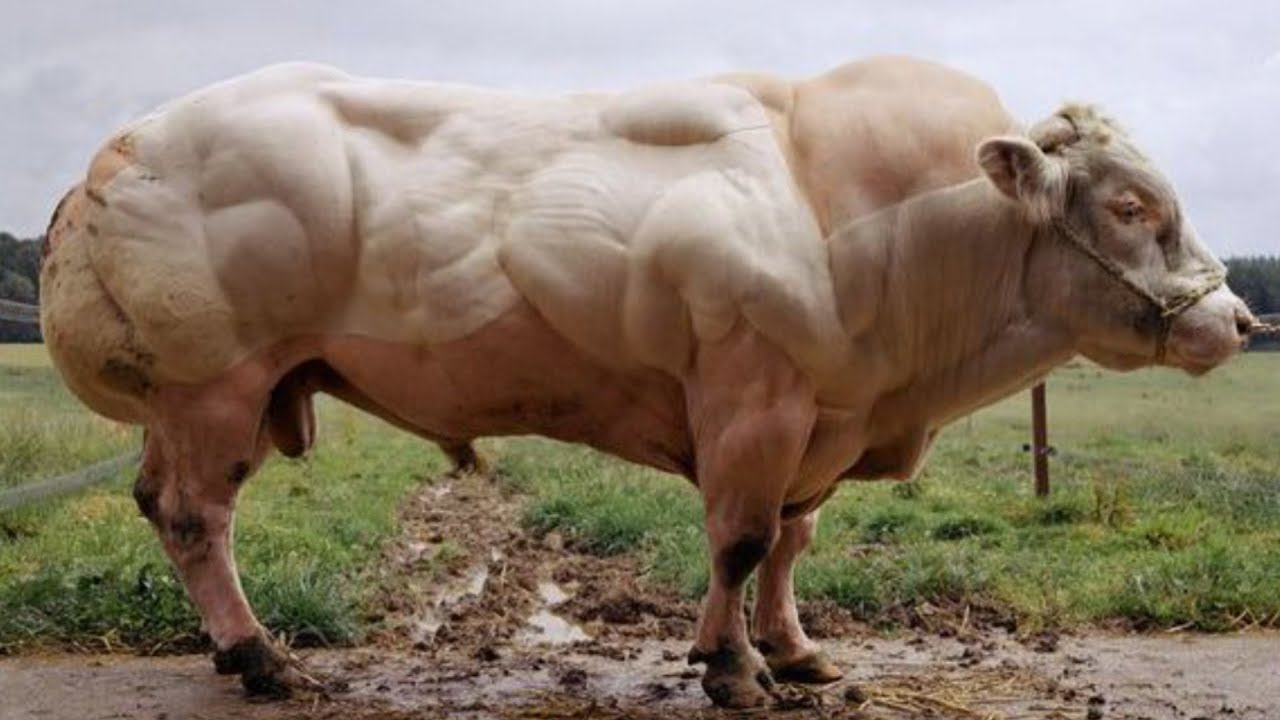
Double muscling is a genetic condition characterized by a significant increase in muscle mass, giving animals an exceptionally sculpted, ultra-muscular appearance. Despite the name, the animal does not actually develop a second set of muscles; rather, the existing muscles grow drastically larger due to an increased number of individual muscle fibers.
The most famous real-world example of this phenomenon is the Belgian Blue cattle breed.
The Biological Mechanism: The Myostatin Gene
To understand double muscling, you have to understand a specific protein called myostatin (encoded by the MSTN gene).
1. The Function of Normal Myostatin
In a normal animal, myostatin acts as a biological "brake" for muscle growth. It is a growth factor secreted in skeletal muscle tissue that tells muscle precursor cells (satellite cells) when to stop dividing and differentiating. This keeps muscle growth proportional to the skeleton.
2. The Genetic Mutation
Double muscling occurs when an animal inherits mutated, non-functional copies of the MSTN gene. In the case of Belgian Blue cattle, this is a homozygous recessive 11-nucleotide deletion in the third exon of the gene.
This deletion shifts the genetic reading frame, causing the cell to produce a completely broken, truncated myostatin protein that cannot bind to its receptors.
3. Hyperplasia vs. Hypertrophy
Without functional myostatin, the biological brake is completely removed, altering the way muscles develop:
-
Hyperplasia (The Primary Driver): Unlike bodybuilders who achieve large muscles by expanding the size of existing fibers (hypertrophy), double-muscled animals are born with up to twice the number of individual muscle fibers (hyperplasia). This massive overproduction happens entirely during embryonic development.
-
Minimal Fat and Collagen: Because the body's energy is aggressively funneled into building muscle tissue, these animals suppress the development of intramuscular fat (marbling) and connective tissue (collagen).
The Case of the Belgian Blue
Originating in Belgium in the late 19th century, the Belgian Blue breed was initially bred for both milk and meat. However, throughout the 20th century, livestock selectors aggressively favored the double-muscling trait due to its staggering economic advantages for the beef industry.
The Economic & Culinary Advantages
| Feature | Standard Beef Cattle | Belgian Blue (Double-Muscled) |
|---|---|---|
| Dressing Percentage | ~60-65% of live weight is carcass | Up to 80-85% of live weight is carcass |
| Meat Composition | Standard balance of lean muscle, fat, bone | High percentage of lean meat, significantly less bone and fat |
| Tenderness | Varied, relies on fat marbling | Extremely tender due to finer muscle fibers and low collagen content |
Because connective tissue (collagen) is what typically makes meat tough, the low-collagen, fine-fiber structure of Belgian Blue beef means it cooks incredibly fast and remains tender even without high fat content.
The Severe Trade-offs: Health and Welfare Issues
While highly profitable for meat yield, the removal of the myostatin brake comes with profound biological and anatomical consequences for the animal's health.
1. Dystocia (Obstructed Labor)
This is the most critical welfare issue. Because calves are born with massive shoulder and hindquarter muscles, they are often too large to pass naturally through the maternal birth canal.
-
In purebred Belgian Blue herds, near-universal Caesarean sections (C-sections) are required to deliver calves safely.
-
This makes the breed entirely dependent on human veterinary intervention for reproduction.
2. Organ and Skeletal Disproportion
Muscles grow exponentially, but the animal's internal organs and skeleton do not scale to match.
-
Respiratory Stress: The lungs and heart remain normal or even slightly reduced in size, meaning they must work significantly harder to oxygenate a massive, oversized muscular frame. Belgian Blues are highly susceptible to respiratory illnesses and heat stress.
-
Underdeveloped Bones and Joints: The bones are thinner and less dense than those of standard cattle, which, combined with the extreme weight of the muscles, puts tremendous structural strain on their joints, frequently leading to lameness.
3. Reduced Fertility
Both bulls and cows display lower overall fertility. Bulls produce lower semen volumes with reduced sperm motility, and cows experience delayed puberty and irregular estrus cycles.
Beyond Cattle: Other Occurrences
The myostatin mutation is not unique to cattle. It has popped up spontaneously in several other species, often tracked down and bred for specific uses:
-
Whippets ("Bully Whippets"): A natural mutation in the myostatin gene occasionally produces ultra-muscular whippets that are incredibly fast but prone to muscle cramping.
-
Texel Sheep: A popular breed of sheep that carries a myostatin mutation, prized for high-yield lean mutton.
-
Humans: Extremely rare cases exist where children are born with disrupted myostatin pathways, resulting in toddlers with immense physical strength and double the normal muscle mass, generally without the severe respiratory complications seen in cattle.