Fiber Optic cable
- The layer just outside of the core is called cladding.
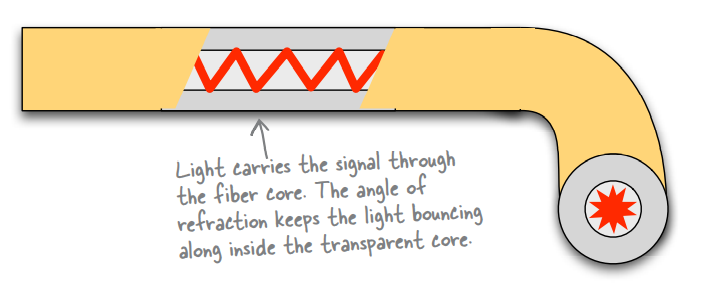
- Outside of the cable is coated with polymer, and Kevlar® threads
- Fiber-optic cables usually have a minimum bend radius of 3.0 cm.
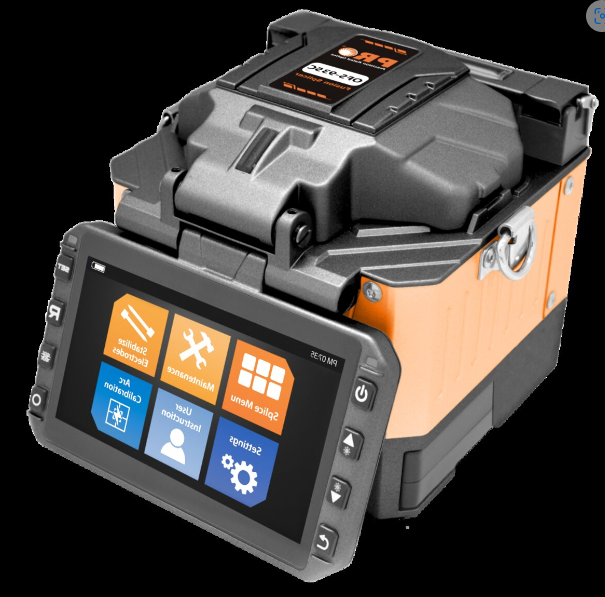
Fusion Splicer
A fusion splicer allows you to fuse two pieces of fiber together. The splicer provides high-precision guides that allow you to line up the fiber. Once you’ve got the ends lined up, you heat the two ends with an electric arc and push them together. After you fuse the ends together, the fusion-splicer heat-shrinks a protective cover over your splice.
Strip the coating from each end of the fiber-optic cable you want to splice.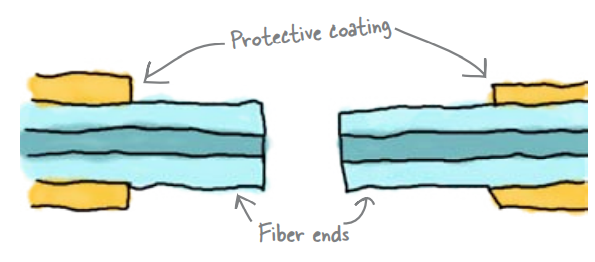
Line up each end.
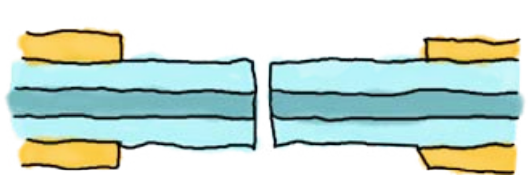
Smooth the ends before fusing them.
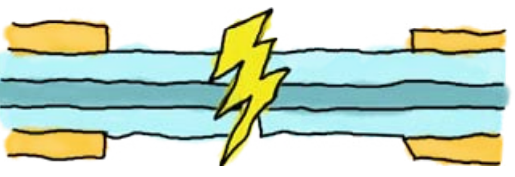
Fuse the ends together.
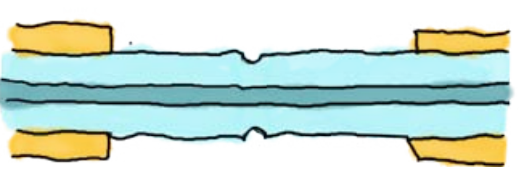
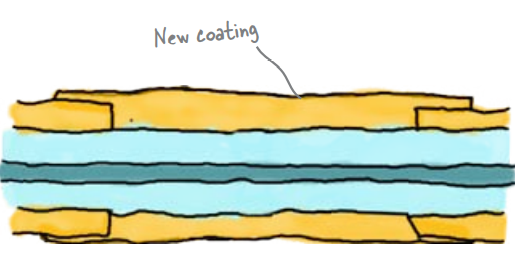
Finish the splice by covering it with new coating
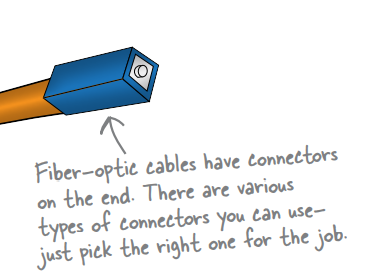
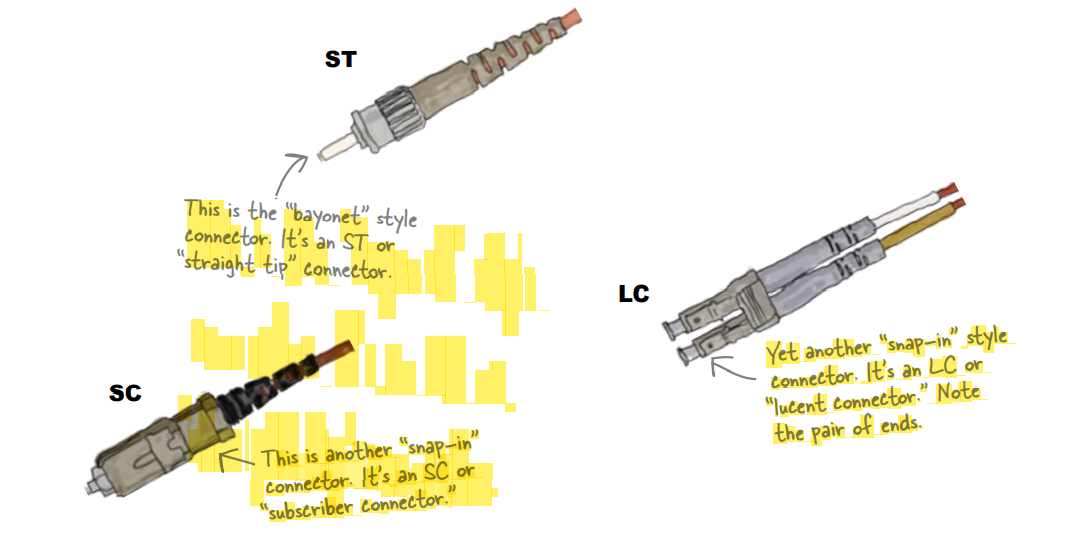
Types of Connector
- Straight tip connector
- Subscriber connector
- Lucent connector
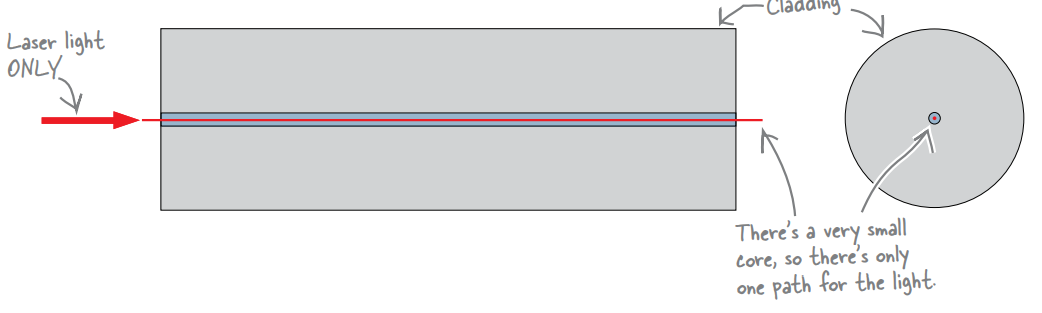
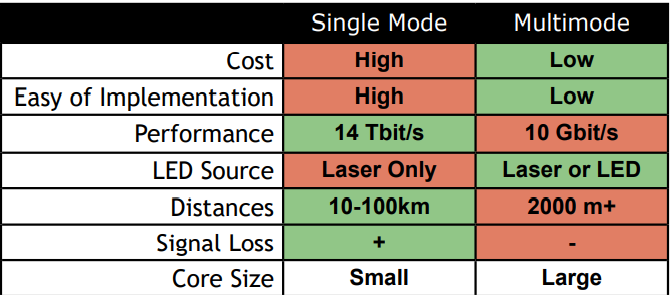
Single mode fiber
In a single mode fiber, the light travels in a single path.
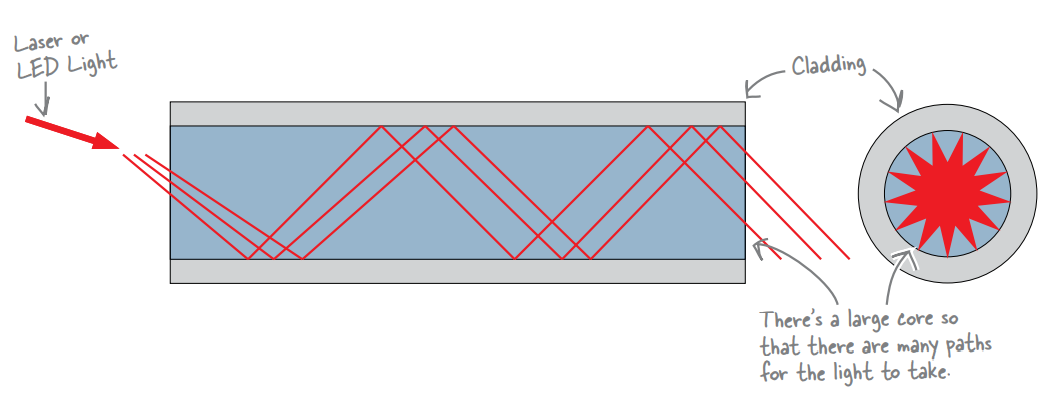
Multimode fiber
In a multimode fiber, the light travels many paths. It takes a laser or LED light,
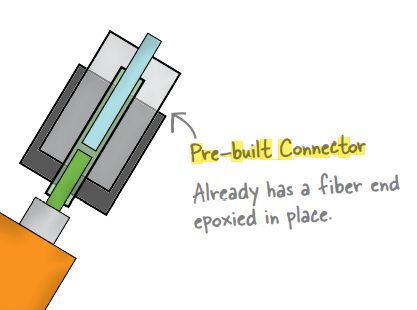
Pre-built Connector
- Fit the connector on the fiber-optic.
- Use a pre-built connector and splice it to the exisiting patch cable.
- This technique is faster and easier, but there is some light loss where the two fibers are pushed together.
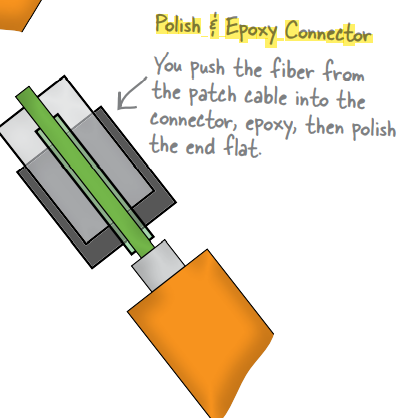
Epoxy
Use a connector that does not have a fiber inside. You epoxy the fiber of the patch cable inside the connector, then polish the end of the fiber. This technique is slower and more complicated, and you need special equipment and training. The advantage is that it makes a higher quality connection.