Discovering Molecules
Can we take any molecules with a valencies that would fill the outer shell and they all form a compound?
is there no exception at all?
The short answer is no, there are plenty of exceptions. While the "valency rule" (often taught as the Octet Rule) is a fantastic shorthand for introduction to chemistry, nature doesn't like being confined to a single rulebook. Just because the math of the valencies works out perfectly on paper to fill an outer shell does not guarantee a compound can actually exist.
Here is why that perfect match doesn't always result in a stable compound, along with the major exceptions.
1. Geometric Disasters: Steric Hindrance
Sometimes, the valencies say "yes," but the physical size of the atoms says "no." If you try to pack too many large atoms around a small central atom, they physically crowd each other out. This is called steric hindrance.
-
The Paper Math: Carbon has a valency of 4. Iodine has a valency of 1. On paper, Carbon Tetraiodide (
) and Silicon Tetraiodide ( ) both perfectly satisfy the valency rules. -
The Reality: While
can barely exist at low temperatures, it is highly unstable and decomposes easily because those four massive iodine atoms are crammed too tightly around the tiny carbon atom. If you tried to go a step further and force even larger atoms together based strictly on valency, the molecule would rip itself apart instantly.
2. The Inert Pair Effect (The Lazy Electrons)
As you move down the periodic table to heavier elements (like Lead, Bismuth, or Thallium), the outermost
- The Exception: Lead (
) has 4 valence electrons. According to strict valency, it should happily form Lead Tetrachloride ( ) to fill its shell. While it can form, it is highly unstable and explosive at room temperature, preferring to drop two chlorine atoms to become Lead Dichloride ( ). The expected valency completely fails to predict its true behavior.
3. Elements That Don't Want a "Full" Shell
Many stable compounds exist where the outer shells are explicitly not filled to the standard 8 electrons (octet).
Electron-Deficient Compounds (Too Few)
Elements like Boron and Beryllium often form perfectly stable compounds where they are totally fine leaving their outer shells incomplete.
- Example: Boron Trifluoride (
). Boron shares its 3 valence electrons with 3 Fluorine atoms. Boron ends up with only 6 electrons in its outer shell instead of 8. It is highly stable and doesn't bother filling the rest of the shell under normal conditions.
Hypervalent Molecules (Too Many)
Elements in Period 3 and below have access to
- Example: Sulfur Hexafluoride (
). Sulfur expands its shell to hold 12 valence electrons. It completely shatters the basic valency rule, yet it is one of the most chemically inert (stable) gases known to science.
4. Thermochemical Reality: The Energy Barrier
For a compound to form, the reaction needs to be energetically favorable (usually exothermic, releasing energy).
Even if you find elements with perfectly matching complementary valencies, if the energy required to break the existing bonds of the reactants is higher than the energy released by forming the new compound, the reaction simply won't happen spontaneously. ---
Summary Checklist
Before a compound can exist, it must pass three tests:
-
Electronic: Do the orbitals mathematically allow for this sharing/transfer?
-
Steric: Is there physically enough room for the atoms to sit next to each other?
-
Energetic: Does forming this molecule lower the overall potential energy?
Valency only looks at the first test. If a molecule fails tests 2 or 3, it won't form—no matter how perfect the valency looks on paper!
So, majority of the compounds dont follow the valency rule?
It is more accurate to say that the simplest version of the valency rule (the Octet Rule) works perfectly for a specific group of elements, but fails to account for the vast majority of the periodic table.
If you are looking at organic chemistry—the chemistry of life involving Carbon, Hydrogen, Oxygen, and Nitrogen—the valency rules are incredibly reliable. But once you step outside that bubble into the rest of the chemical universe, "exceptions" actually become the norm.
Here is how the breakdown happens across the periodic table:
1. The Transition Metals (The "Rule Breakers")
The largest block of the periodic table consists of transition metals (like Iron, Copper, Gold, and Platinum). These elements completely abandon a single fixed valency because they have
-
Variable Valency: Iron (
) can have a valency of 2 or 3. Manganese ( ) can have a valency anywhere from 2 all the way up to 7 depending on what it is reacting with. -
They don't have a single "outer shell" to fill; instead, they have a complex cloud of electrons that shifts depending on energy levels.
2. The Heavy Elements (Hypervalency)
As mentioned before, any element from Period 3 or lower on the periodic table (like Phosphorus, Sulfur, Chlorine, and everything below them) can expand its octet.
Because they have access to empty
| Element | Standard Expected Valency | Common "Expanded" Valency | Example Compound |
|---|---|---|---|
| Phosphorus ( |
3 | 5 | |
| Sulfur ( |
2 | 4 or 6 | |
| Chlorine ( |
1 | 3, 5, or 7 |
3. Where the Valency Rule Actually Rules
The valency rule isn't useless—it's just localized. It rules supreme in Period 2 of the periodic table:
Because these atoms are very small and completely lack
The Modern Perspective: Molecular Orbitals
Chemists today don't really use basic valency to predict if a complex compound will form. Instead, they use Quantum Mechanics and Molecular Orbital (MO) Theory.
Instead of imagining atoms as puzzle pieces with a fixed number of hooks (valencies), modern chemistry views bonding as the merging of electron cloud waves. If the waves overlap in a way that lowers the overall energy of the system, a compound forms—regardless of what the traditional valency tally says!
Do we have a complete set of rules to predict all element combinations / compound perfectly?
The short answer is no, we do not have a single, clean "cheat sheet" of rules that can perfectly predict every single element combination or compound instantly.
If you want a flawless prediction, you cannot rely on simple rules. Instead, you have to use Quantum Mechanics and simulate the physics of the atoms from scratch using massive supercomputers.
However, chemists have a hierarchy of frameworks. As you move down this list, the rules get more complex, but the predictions get closer to perfection:
1. The Lewis / Valency Rules (The Simple Tier)
-
How it works: Count valence electrons, draw dots, and try to give every atom 8 electrons (an octet).
-
The Verdict: Great for basic organic chemistry (carbon, hydrogen, oxygen), but completely fails for transition metals, heavy elements, and highly reactive molecules.
2. VSEPR & Hybridization (The Geometric Tier)
-
How it works: Valence Shell Electron Pair Repulsion (VSEPR) theory assumes that electron pairs around a central atom want to stay as far away from each other as possible. It uses the hybridization of atomic orbitals (
) to predict the exact 3D shape and stability of a molecule. -
The Verdict: Excellent for predicting shapes and whether a molecule can physically exist without collapsing under its own geometric crowding (steric hindrance). However, it still occasionally fails to predict exact magnetic properties or highly unusual bonding environments.
3. Molecular Orbital (MO) Theory (The Quantum Tier)
This is the closest thing we have to a definitive "rulebook" in conceptual chemistry.
-
How it works: Instead of pretending electrons belong to individual atoms or are neatly shared in fixed bonds, MO theory treats the entire molecule as a single system. When atoms come together, their atomic orbitals merge to form Molecular Orbitals that span the whole molecule.
-
The Rule of Stability: It creates "bonding orbitals" (which hold the molecule together) and "antibonding orbitals" (which tear it apart). If a combination has more electrons in bonding orbitals than antibonding orbitals, the compound can exist.
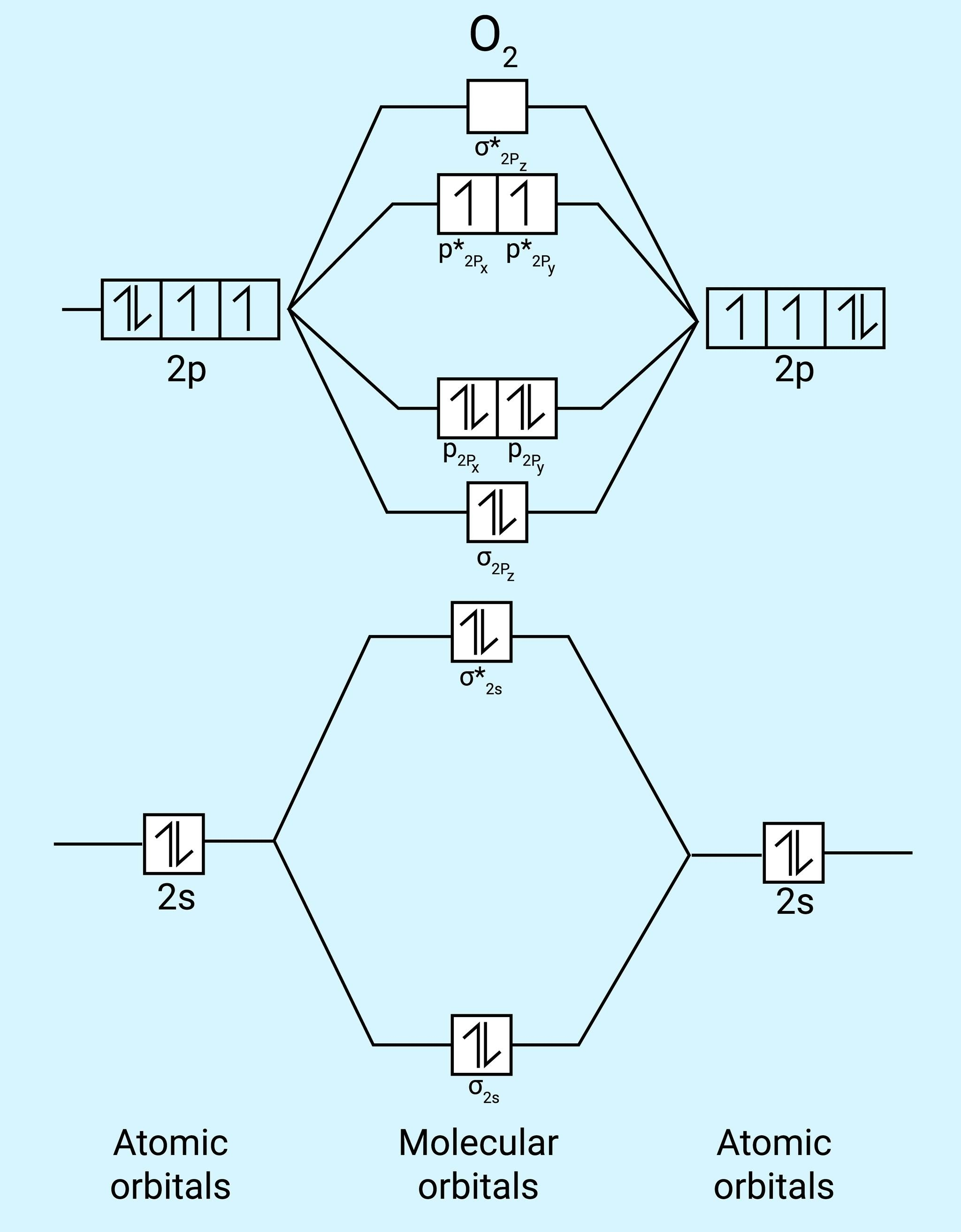
4. Density Functional Theory / Computational Quantum Chemistry (The Perfect Tier)
When rules fail, physics takes over. This is how modern materials science and drug discovery actually work.
Instead of a chemist looking at a rulebook, a computer solves the Schrödinger Equation—the fundamental equation of quantum mechanics—for all the electrons and nuclei in the proposed molecule.
-
How it works: Supercomputers simulate the electrostatic attractions, electron spins, quantum repulsions, and energy states of the atoms. If the mathematical simulation finds a global energy minimum, the compound is stable and can be synthesized in a lab.
-
The Verdict: This is as close to "perfect prediction" as humanity can get. The downside? It requires immense computing power, sometimes taking days or weeks of simulation just to test a single complex molecular combination.
Why a Simple "Perfect" Rulebook is Impossible
The universe operates on energy minimization, not rigid slots. An element doesn't look at its outer shell and think, "I need two more." Instead, nature constantly shifts electrons around to find the lowest possible state of potential energy. Because electron clouds are fluid, dynamic waves, their behavior changes based on temperature, pressure, and the specific neighboring atoms, making a simple, universal list of rules impossible to capture on a single sheet of paper.
But why can't i run a simple computer program on all possible combinations. And then test and discard which ever is not possible
like start with H, H2, LiH2,.....
You actually can do this, and chemists absolutely do! The method you are describing is a massive field of modern science called High-Throughput Virtual Screening and Computational Materials Discovery.
However, running a "simple" program to test all possible combinations faces two massive roadblocks that make a complete, brute-force search impossible: The Combinatorial Explosion and The Quantum Computational Tax.
Here is why we can't just hit "Run" on a basic computer to map out every possible molecule.
1. The Combinatorial Explosion (The Math Problem)
The number of ways you can combine elements grows exponentially. It quickly reaches numbers so massive that there isn't enough time left in the universe to compute them all.
Let's look at the math:
-
There are roughly 118 elements on the periodic table.
-
If you want to test just small molecules made of up to 5 atoms, you aren't just looking at
. You have to test combinations like , , , , and so on. -
The number of possible chemical combinations for just small, simple molecules easily skyrockets past
possibilities.
To put that in perspective: The entire observable universe only contains about
2. The "Quantum Tax" (The Physics Problem)
You mentioned discarding whichever combination is "not possible." To determine if a molecule is stable (possible) or unstable (impossible), a computer cannot just look at a simple checklist. It has to calculate the physics of the electrons.
Because electrons are quantum particles, you have to solve the Schrödinger Equation for every single electron and nucleus in that proposed molecule.
-
The Problem: The complexity of this calculation scales exponentially with the number of electrons.
-
To simulate a single, relatively simple molecule accurately using quantum mechanics might take a powerful desktop computer a few minutes to a few hours.
-
If you have
combinations, and each one takes just one second to calculate, the simulation would still take trillions of years to finish.
How Scientists Actually Do It Today
Because we can't test everything, scientists use clever shortcuts to do exactly what you envisioned:
1. Evolutionary Algorithms (Genetic Programs)
Instead of testing
2. Machine Learning & AI
In recent years, deep learning models (like Google DeepMind's GNoME) have changed the game. Instead of spending hours running heavy quantum physics calculations for every single structure, an AI is trained on known stable compounds. It can then predict with incredible speed whether a new combination will be stable.
Using this method, AI recently predicted the existence of 2.2 million new stable crystal structures—expanding humanity's known stable materials by an order of magnitude.
3. Filtering by Rules First
To save computing power, a program will use those basic valency and geometric rules you asked about earlier as a "first pass" filter. If a combination is physically impossible due to massive atoms overlapping (steric hindrance), the program discards it instantly in microseconds, saving the expensive quantum simulations only for the combinations that have a realistic fighting chance!
Can we look at the molecules alone and deduce their properties?
What are known methods?
Yes, we can absolutely deduce a molecule’s properties just by looking at its structure. In fact, this is the core foundation of modern chemistry, pharmacology, and materials science.
If you know exactly how the atoms are arranged in 3D space, you can predict its boiling point, toxicity, color, reactivity, and magnetism before ever synthesizing it in a lab.
Chemists use a spectrum of methods to achieve this, ranging from quick mental shortcuts to massive supercomputer simulations. Here are the primary known methods.
1. Structural & Functional Group Analysis (The Intuitive Method)
This is the "human-readable" approach. Molecules are made of specific clusters of atoms called functional groups that behave the same way no matter what molecule they are attached to. By identifying these groups, you can immediately deduce the molecule's macro-properties.
-
How it works: You look for specific patterns. An
(alcohol) group means the molecule can form hydrogen bonds, raising its boiling point and making it water-soluble. A long chain of carbons and hydrogens (hydrocarbons) means it will be oily and hydrophobic. -
What it predicts: Solubility, acidity/basicity, general reactivity, and state of matter (gas, liquid, solid) at room temperature.
2. QSAR: Quantitative Structure-Activity Relationships (The Statistical Method)
This is a data-driven approach widely used in the pharmaceutical industry to design new drugs without testing millions of chemicals on live cells.
-
How it works: A computer turns a molecule's structure into a set of numbers (called "molecular descriptors") representing its weight, surface area, number of bonds, and charge distribution. It then compares these numbers to a massive database of known chemicals using statistical models or Machine Learning.
-
What it predicts: Biological activity, toxicity, how easily a drug can cross the blood-brain barrier, and environmental biodegradability.
3. Spectroscopy Simulation (The Fingerprint Method)
Every molecule interacts with light (electromagnetic radiation) in a unique way based entirely on its bonds and geometry. We can mathematically deduce how a molecule will absorb or emit light.
-
Infrared (IR) Prediction: Different chemical bonds act like tiny springs. A
double bond vibrates at a completely different frequency than a single bond. By looking at the bonds, we can predict its infrared spectrum. -
UV-Vis & Color Prediction: By looking at how electrons are conjugated (shared across alternating double bonds), we can deduce the energy gap between electron shells. This allows us to predict exactly what color a molecule will look to the human eye.
4. Molecular Dynamics (The Physics Simulation Method)
If you want to know how a molecule behaves over time (e.g., how a protein folds or how a drug docks into a virus), you use Molecular Dynamics (MD).
-
How it works: The computer treats atoms like spheres and chemical bonds like springs. It applies classical laws of physics (
) to calculate how all the atoms will push, pull, twist, and collide with each other over femtoseconds (quadrillionths of a second). -
What it predicts: Melting point, viscosity, mechanical strength, and how a molecule moves and changes shape in a liquid environment.
5. Quantum Mechanics / Ab Initio Methods (The Fundamental Method)
When you need absolute precision and cannot rely on approximations, you turn to quantum chemistry methods like Density Functional Theory (DFT).
-
How it works: This method ignores "springs and spheres" and looks at the fundamental reality: a collection of atomic nuclei floating in a cloud of quantum electron waves. By solving approximations of the Schrödinger equation, the computer maps out the exact shape and density of the electron cloud.
-
What it predicts: Magnetic properties, exact bond energies, transition states during a chemical reaction, and electrical conductivity.
The Ultimate Goal: Inverse Design
Historically, the workflow was: Look at Molecule
Today, with AI and advanced computing, scientists are flipping this workflow upside down into Inverse Design: Input Desired Properties